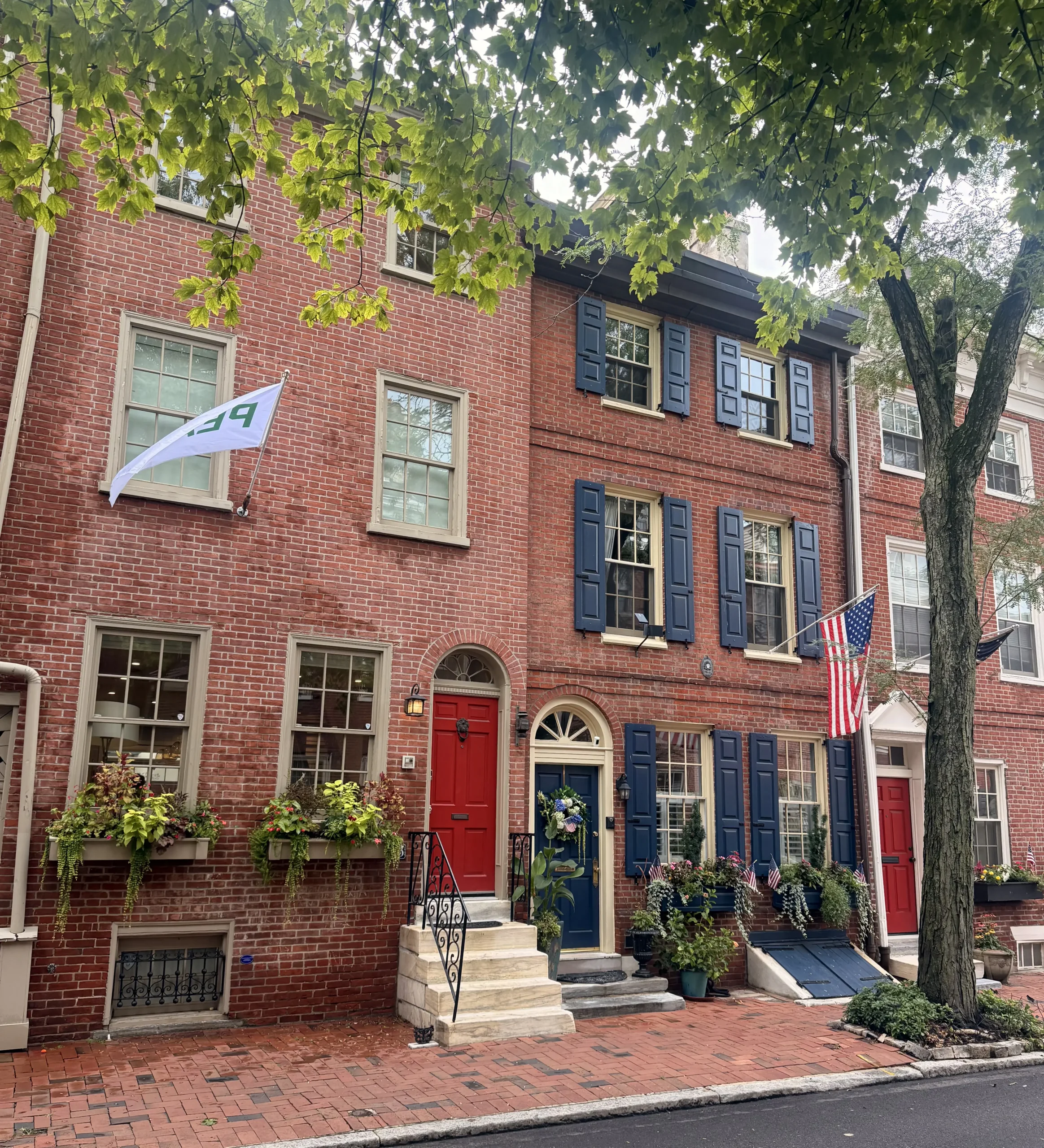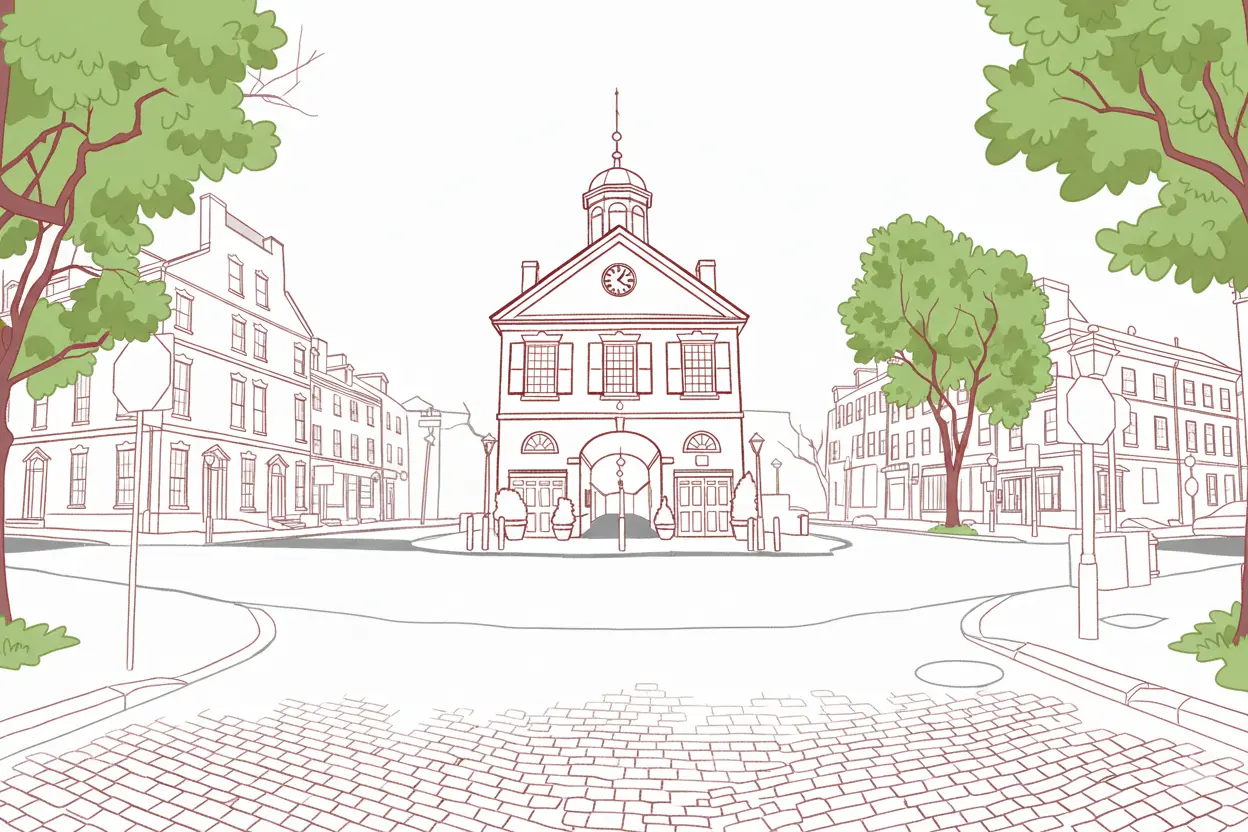
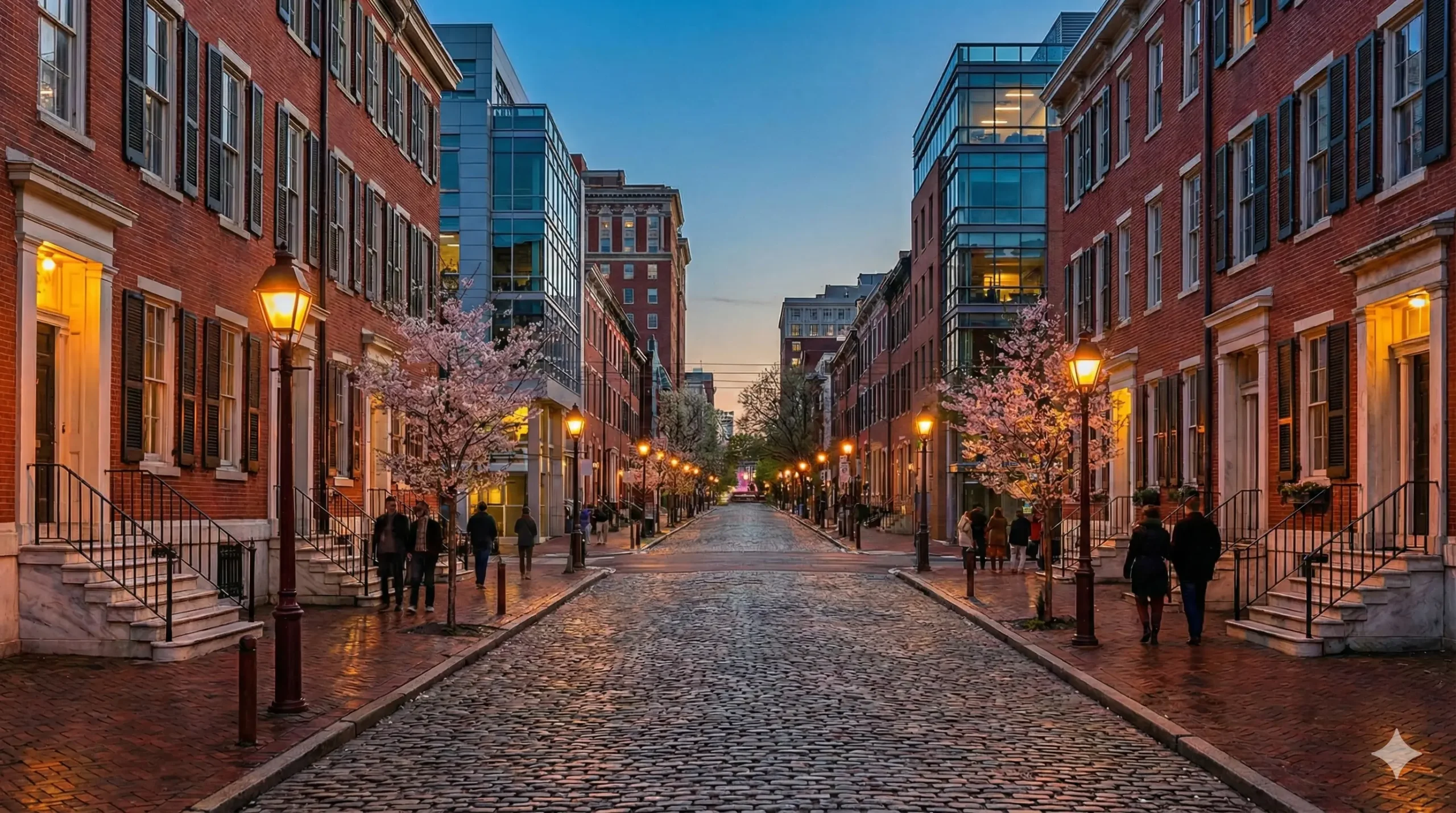
There is a specific kind of magic that happens when you turn off a busy Philadelphia thoroughfare and find yourself on a Society Hill “side street.” Suddenly, the sounds of the city fade, replaced by the soft clip-clop of a carriage or the rustle of ivy against 200-year-old brick.
Society Hill is home to the largest concentration of original 18th- and 19th-century residential architecture in the United States. While the grand mansions on the main streets are impressive, the true heart of the neighborhood lies in its intimate, “cute” blocks—the narrow alleys, cobblestone paths, and hidden ways that make this neighborhood feel like a living museum.
If you’re looking for the ultimate Sunday stroll (or your next home), these are the five most enchanting blocks in Society Hill.
The 200 Block of Delancey Street
The Vibe: The Quintessential "Movie Set" Block
History: Named after William Heathcote DeLancey, a prominent bishop and Provost of UPenn, this block is the gold standard of Society Hill elegance. Developed primarily between 1840 and 1870, it features perfectly preserved Federal-style homes with signature red brick, white marble stoops, and polished brass knockers.
Why it’s "Cute": This block is so visually perfect it has become a favorite for Hollywood directors (appearing in films like The Sixth Sense). The deep red brick and uniform architecture create a rhythmic beauty that feels like a postcard from a different century.
The 300 Block of S. Philip Street
The Vibe: A Cobblestone Secret
History: Tucked away between Spruce and Pine, the 300 block of South Philip is a quiet, cobblestone-lined retreat. Historically, this area was a hub for the city’s early merchant class. One notable home here, built circa 1818, was once the hub for the legendary banker Stephen Girard and his sea captains
Why it’s "Cute": The street is incredibly narrow, forcing life to slow down. The mix of original ironwork and small, blooming window boxes makes it feel like a private village path rather than a city street.
The 300 Block of S. American Street
The Vibe: The "Father, Son, and Holy Ghost"
History: This block is famous for its "Trinity" houses—nicknamed for their three-story, one-room-per-floor layout. Historically, these were the homes of the city’s working class and dockworkers. In the 1960s, this block was a centerpiece of the South Street Renaissance, where artists like Isaiah Zagar began transforming the area with mosaics and creative energy.
Why it’s "Cute": The scale of the homes here is what makes it so charming. They are tiny, vertical, and full of character. Walking here feels like exploring a miniature version of a great city.
The 200 Block of Saint Joseph Way
The Vibe: A Hidden Pedestrian Sanctuary
History: This is less of a street and more of a "way." It sits adjacent to Old St. Joseph’s Church—the oldest Roman Catholic church in Philadelphia, founded in 1733. Legend says Benjamin Franklin advised the church to build its entrance through a narrow alleyway to keep it hidden during times of religious tension.
Why it’s "Cute": The scale of the homes here is what makes it so charming. They are tiny, vertical, and full of character. Walking here feels like exploring a miniature version of a great city.
The 500 Block of Delancey Street
The Vibe: The Architectural Kaleidoscope
History: While the 200 block is about uniformity, the 500 block represents the successful "Urban Renewal" of the 1960s led by Edmund Bacon. Here, you’ll find 18th-century Federal houses sitting harmoniously alongside award-winning modern "infill" homes designed by architects like Louis Sauer.
Why it’s "Cute": It’s a perfect example of how Society Hill stays relevant. You get the historic brick sidewalks and Franklin lamps, but with a mix of architectural styles that keep the block feeling vibrant and alive rather than stagnant.
The Bottom Line
The appeal of Society Hill isn’t just in the history—it’s in the scale. These blocks were built for people, not cars, and that human-centric design is what makes them feel so “cute” and inviting today.